
Most HVAC companies in Northern Virginia already have a website. The problem starts after someone submits a form. The quote lands in email, the schedule changes in a group text, and the homeowner calls because there is no shared place to see what happens next.
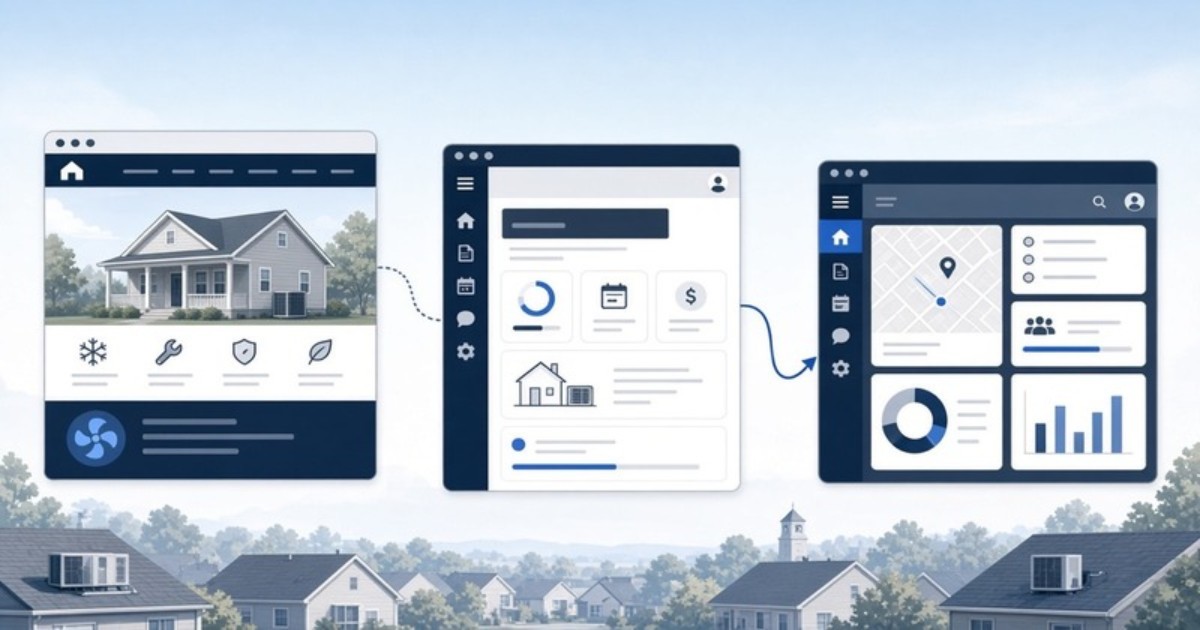
An HVAC website Northern Virginia operators can trust is more than a homepage and a list of service areas. It should connect a public website, a customer portal, and a staff/dispatch portal. Business Rocket builds those three surfaces as one branded product.
What breaks when your website stops at lead generation
A brochure site can explain heat-pump replacement, maintenance plans, indoor-air-quality work, and emergency service. It can also collect a request. None of that tells the office who owns the follow-up, which estimate is current, or whether the customer has seen the latest schedule.
HVAC work creates frequent exceptions. A diagnosis changes the scope. Equipment availability shifts an install date. A technician finishes early across the county while another call runs long. When the website and operating process are disconnected, office staff become the integration layer.
That manual approach may survive a quiet week. It becomes fragile during the first hot stretch, a hard freeze, or a run of changeouts. Every extra call, copied note, and forwarded PDF adds another chance for the customer and team to work from different information.
The public website should qualify and route the request
The public surface still matters. It should make your services, coverage area, and next step clear before a visitor calls. A homeowner looking for no-cooling help needs a different path from a property manager planning a multi-system replacement. Clear intake gives the office useful context instead of a message that only says “please call me.”
Local pages can explain where you work across Loudoun, Fairfax, and Prince William without pretending that every city is the same. Service pages should answer practical questions, set expectations, and send each request into the same process the staff uses. The goal is not more form fields. The goal is cleaner handoff.
Customer portal: estimates, status, and history without inbox chaos
A branded customer portal gives homeowners a stable place to review estimates, follow next steps, and see relevant job history. They do not have to search an email chain for the revised option or wonder which attachment is current. The portal remains part of your brand rather than dropping them into an unfamiliar generic page.
That visibility also changes phone traffic. Customers can check routine information without interrupting dispatch, while still knowing how to reach a person when the situation needs judgment. A portal does not replace service. It removes avoidable uncertainty so the office can focus on exceptions and actual decisions.
For replacement work, the portal can keep the decision path organized from initial request through estimate review and scheduling communication. For repeat service, history gives both sides context. The useful outcome is continuity, not a flashy dashboard.
Staff and dispatch portal: keep the day out of group texts
The staff surface is where intake, ownership, status, and handoffs stay visible to the people running the day. An office manager should be able to see what needs attention without asking three technicians or scrolling through yesterday’s chat. A technician update should not disappear because it was sent to one person.
Dispatch still requires human choices. The portal does not decide which call should move or which customer needs a direct conversation. It gives the dispatcher a common record for making those choices. That matters when emergency calls arrive while crews are already spread across Northern Virginia.
Billing and follow-up also benefit from the same record. The office can see that field work changed, that a customer needs a revised estimate, or that a next step is waiting. Fewer handoffs depend on memory.
How the three surfaces work as one system
The public website creates a clear front door. The customer portal keeps the customer-facing record accessible. The staff/dispatch portal gives the company an operating view. Each surface serves a different audience, but they should share one path instead of acting like three unrelated tools.
A request can begin on the website, become visible to staff, and produce customer-facing updates in the portal. The homeowner sees your brand throughout. The office has a defined owner and status. Management can inspect the process without opening personal inboxes.
This structure also leaves room for tools you already use. Business Rocket is not positioned as deep inventory software or a route-optimization engine. The three-surface layer can organize the branded experience and core handoffs while your shop keeps a specialized field tool where it earns its place.
Where Business Rocket fits beside full FSM software
Full field-service platforms such as Jobber, Housecall Pro, and ServiceTitan are built for deeper scheduling, inventory, technician, and financial workflows. They can be the right choice when those functions drive the purchase. They are a different category from a branded website with connected customer and staff portals.
Business Rocket starts with the three surfaces: public site, customer portal, and staff/dispatch portal. Lite brand onboarding is included. The core build is $2,500, followed by $99/mo for hosting and care. An optional $399/mo growth add-on is available after launch for companies that want ongoing growth work.
The decision should follow the bottleneck. If heavy inventory, payroll, or advanced routing is the primary problem, evaluate a full FSM platform. If your public presence, customer communication, and office visibility are fragmented, the Business Rocket layer addresses that gap directly.
Who this is for across Northern Virginia
This model fits HVAC owners and operations managers serving Loudoun, Fairfax, and Prince William who are tired of buying brochure redesigns that leave intake and follow-up untouched. It is especially relevant when more technicians, more service areas, or seasonal demand have made the owner’s inbox a poor control center.
Ashburn-heavy residential routes may need clear replacement and maintenance intake. Reston-area work may mix homeowners, associations, and commercial contacts. Prince William coverage can create longer dispatch decisions. Those are different operating contexts, but all benefit from clear ownership and visible status.
What you get and how to start
Business Rocket configures the public website, customer portal, and staff portal around the way your shop receives and moves work. The first conversation maps the current path from inbound request to completed follow-up, including the points where information gets copied, delayed, or lost.
Review clear pricing or book a workflow demo. Call (571) 600-2835 or email help@businessrocket.ai to discuss the three surfaces for your HVAC operation.
About Business Rocket Editorial
NoVA trade systems · Business Rocket
Practical guides on 3-surface web systems: public booking, client portal, and staff dispatch, for HVAC, plumbing, roofing, and home-service operators across Loudoun, Fairfax, and Prince William.
More from Business Rocket EditorialReady to upgrade from a static brochure to a 3-surface system?
We'll show you public site + client portal + staff portal configured for your service business.
Book a Demo →